





Publication of a chapter by Paula Gomes-Ribeiro (CTC)
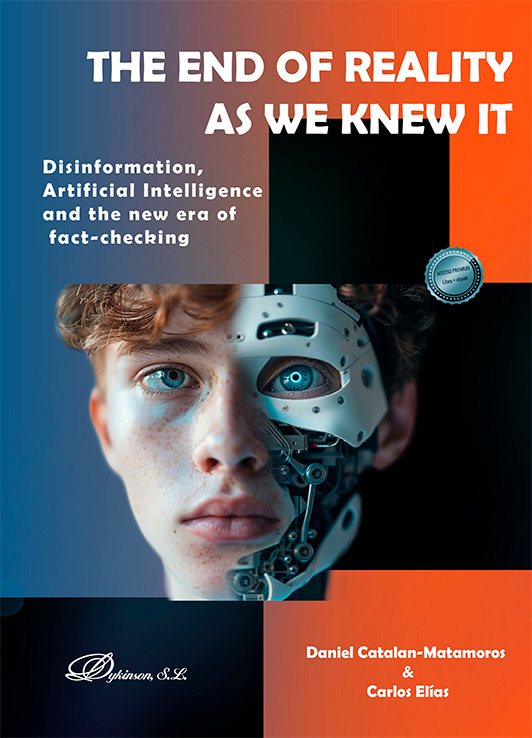
In the chapter ‘Re-signifying Resistance: Platform Drift and the Sonic Afterlives of Bella Ciao and Grândola, Vila Morena’, published in The End of Reality as We Knew It: Disinformation, Artificial Intelligence and the New Era of Fact-Checking, a book edited by Daniel Catalan-Matamoros and Carlos Elías, Paula Gomes-Ribeiro (member of the Research Group for the Study of Music, Critical Theory and Communication/CESEM and coordinator of SociMus – Advanced Studies in the Sociology of Music Cluster) analyses how two iconic songs of resistance are reinterpreted and given new meaning on digital platforms, revealing the challenges and transformations facing memory, politics and cultural circulation in the age of disinformation and artificial intelligence.
Abstract: This article examines the algorithmic trajectories of Bella Ciao and Grândola, Vila Morena on TikTok and develops the concept of ‘platform drift’ as a contribution to the study of the relationships between sound, political memory and digital disinformation. The concept refers to the process through which musical artefacts historically imbued with political meaning become detached from their original contexts and come to function as affective matrices available for divergent ideological uses. Drawing on case studies, the article demonstrates that digital disinformation is linked to textual and visual re-signification and, crucially, to the sonic modulation of memory, atmosphere and political sentiment. By contrasting the affective plasticity of Bella Ciao with the ritual power of Grândola, Vila Morena, it is argued that critical listening is today an indispensable means of understanding how politics is reorganised within algorithmic cultures.
